Team in Casablanca
Our African payroll specialists configure and run your payroll — one team, one accountable contract.
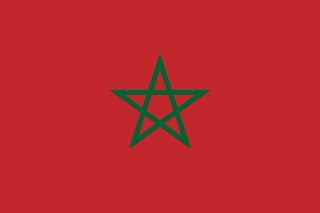 Popay Payroll · Morocco
 PopayPayroll
CNSS and AMO contributions, Labour Code payslips, CDI/CDD contracts and leave — configured to Moroccan law, not bolted on.
Team in Casablanca. The people who run your payroll know Moroccan law from the inside — CNSS, AMO, Labour Code, no shortcuts.
MA Casablanca · North Africa hub — payroll live in Morocco today
Understand HR in Morocco
The full local picture for Morocco: statutory contributions and the rules our engine runs natively — maintained by our Pan-African legislation team.
01 · At a glance
The fixed parameters every Moroccan payroll run starts from.
02 · Statutory obligations & contributions
Statutory contributions declared by the employer, each scheme with its own rate,
| Scheme | Employer | Employee | Basis & notes |
|---|---|---|---|
| CNSS — Family allowances | 6.40% | 0% | No ceiling |
| CNSS — Short-term benefits (sickness, maternity, death) and job-loss allowance (IPE) | 1.05% | 0.52% | Ceiling of MAD 6,000/month |
| CNSS — Long-term benefits (old-age, invalidity and survivors' pensions) | 7.93% | 3.96% | Ceiling of MAD 6,000/month |
| AMO — Compulsory health insurance | 4.11% | 2.26% | No ceiling |
| Taxe de formation professionnelle (TFP) | 1.60% | 0% | No ceiling |
03 · Income tax brackets
Income tax (IR) in Morocco is withheld monthly by the employer on a progressive scale of 0% to 37%, applied to taxable salary after social contributions and standard deductions.
04 · Employment contracts
Morocco's Labour Code regulates
05 · Leave & employee rights
The law sets the floor; contracts and collective agreements can add to it. Below are the statutory minimums your accruals must track.
18 working days per year (1.5 days per month of service), fully paid; +1.5 days for each 5 years of seniority. At least 6 months of continuous service
4 paid days per year. At least 6 months of continuous service
14 weeks (98 days): 7 weeks before and 7 weeks after the birth; up to 22 weeks in case of a medically certified pathological condition
3 days, fully paid. To be taken within the month following the birth
Marriage of the employee: 4 paid days · Death of a close relative: 2 paid days
06 · Unions & collective agreements
Affiliated unions negotiate wage scales and union dues that your payroll must calculate, deduct and remit. A poorly applied collective agreement can lead to a dispute to the relevant Court.
It is the oldest national union centre (founded 1955), private and public sectors. Takes part in the tripartite social dialogue that sets minimum wages and negotiates sector agreements
Sector-level bargaining and collective agreements affecting wage scales
Represents workers across sectors in social dialogue and bargaining
Active in public-sector and education bargaining
Our African payroll specialists configure and run your payroll — one team, one accountable contract.
Morocco rules are configured natively inside our engine, not stitched from third-party aggregators.
Regulatory changes are monitored and your configuration updated — so every payslip stays compliant.
In HR, personal contact is everything — and it starts from the first exchange. Tell us about your team in Morocco and we'll map your options, plainly and without commitment.
Popay helped us simplify managing our workforce across Morocco — payroll, contracts and compliance in one place. Reliable, efficient, and always current with local law.
Yes. We file your monthly declarations to CNSS — which covers family allocations, pension, short-term benefits and AMO (health insurance) — via the Damancom platform before the 10th of the following month, with ceilings and sector rates applied automatically.
Native. Popay owns the gross-to-net engine, and Moroccan legislation — SMIG, CNSS ceilings, AMO, Labour Code payslip requirements — is configured inside it. We don’t stitch together third-party aggregators, so there’s one accountable system and one contract.
Yes. Payslips carry every legal mention required by Labour Code Article 371 — position, salary, overtime, deductions and net payable — and we maintain the signed payroll register for each payment.
Yes — a local team in Casablanca, our North Africa hub. The people who configure and run your payroll are in-country and in your time zone, led by our regional expert Mustapha Kasri.
The national interprofessional agreement (CCNI) plus the main sector conventions — Commerce, BTP (construction), Metallurgy & Industries, Banking & Insurance, and Hôtellerie — applied to your employees’ classification.
Questions about payroll, local compliance or digitising your processes? Take a no-commitment slot with our dedicated North Africa expert. Plain, specific, useful.