One Pan-African team
A single Pan-African payroll team configures and runs your payroll: consistent service, wherever your people are.
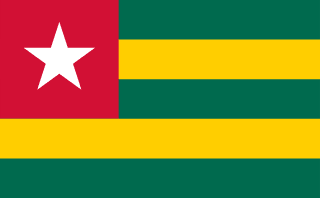 Popay Payroll · Togo
PopayPayroll
Statutory contributions, compliant payslips, local contracts and leave: configured to local law inside our own engine.
One engine, all of Africa. Togo payroll rules run natively inside our own gross-to-net engine: monitored and kept current by our Pan-African team, not stitched from third-party aggregators.
TG · payroll across the continent
Understand HR in Togo
The full local picture for Togo: statutory contributions and the rules our engine runs natively, maintained by our Pan-African legislation team.
01 · At a glance
The fixed parameters every Togo payroll run starts from.
02 · Statutory obligations & contributions
Statutory contributions declared by the employer, each scheme with its own rate,
| Contribution | Employer | Employee | Basis & notes |
|---|---|---|---|
| CNSS — Social Security Old Age / Pension | 17.5% | 4% | On gross monthly salary, capped at a monthly ceiling of 300,000 FCFA |
| CNSS — Family Benefits | 7% | 0% | Uncapped gross salary base (minimum base: SMIG 52,500 FCFA) |
| CNSS — Work Injury / Occupational Risks | 2.5% | 0% | Uncapped gross salary base (minimum base: SMIG 52,500 FCFA) |
| Universal Health Insurance | 3% or 5% | 2% or 5% | Total rate of 10% (5% each for employer/employee, or 3% employer and 2% employee, depending on the scheme), capped at a monthly salary of 500,000 FCFA. |
03 · Income tax brackets (IRPP)
In Togo, personal income tax is calculated by applying a progressive rate (0% to 35%) to net taxable salary after deducting social contributions, a 28% professional expense allowance, and dependent tax reliefs.
| Annual taxable income | Tax Rate |
|---|---|
| 0 – 900,000 | 0% (Tax free) |
| 900,001 – 3,000,000 | 3% |
| 3,000,001 – 6,000,000 | 10% |
| 6,000,001 – 9,000,000 | 15% |
| 9,000,001 – 12,000,000 | 20% |
| 12,000,001 – 15,000,000 | 25% |
| 15,000,001 – 20,000,000 | 30% |
| Above 20,000,000 | 35% |
| Family Situation / Dependents | Reduction |
|---|---|
| Per dependent (spouse, children up to age 25, disabled dependants, or dependent parents and grandparents) | Fixed deduction of 10,000 FCFA per month |
| Maximum dependent allowance limit | Limited to 6 dependents (reducing the net taxable income by up to 60,000 FCFA per month). |
04 · Employment contracts & other terms
Indefinite-term contract (CDI) · Fixed-term contract (CDD)
15 days (hourly workers) · 1 month (~4 weeks for workers/employees) · 3 months (~13 weeks for supervisors and executives)
Based on the average monthly salary over the previous 12 months: 35% per year for the first 5 years, 40% for years 6–10, and 45% thereafter. Not payable in cases of gross misconduct
After 4 consecutive years on a CDD without conversion to a CDI, the employee receives 1 month’s gross salary as compensation
Compensation is due for unserved notice, based on the gross salary and benefits that would have been earned, plus payment for unused leave days.
Public sector: Exceptional bonus periodically granted. Private sector: Not statutory by law, but governed by employment contracts or collective agreements
Based on average earnings over the last 5 years: 20% of average monthly income, plus 1.33% for each 12-month contribution period beyond 180 months. Only 50% of the retirement severance bonus is taxable under IRPP.
05 · Leave & employee rights
The law sets the floor; contracts and collective agreements can add to it. Below are the statutory minimums your accruals must track.
Annual leave: 2.5 working days per month (30 days per year), with possible extra days based on seniority under collective agreements.
A medical certificate is required. Pay depends on seniority and collective agreement provisions.
14 weeks (6 before and 8 after birth). CNSS pays 50% of average daily salary, subject to 12 months of registration. Employer top-up may apply. Family benefits are also available for up to 4 children.
2 days of paid leave for the birth of a child.
3 days for the employee’s marriage, 3–4 days for the death of a close relative, and 1 day for a child’s marriage
06 · Unions & collective agreements
Affiliated unions negotiate wage scales and union dues that your payroll must calculate, deduct and remit. A poorly applied collective agreement can lead to a dispute before the required Court.
Represents workers in sector-level social dialogue and collective bargaining negotiations affecting wage grids and working conditions
Key participant in national tripartite negotiations (Government, Employers/CNP-Togo, Unions) establishing collective agreement updates (CCIT) and SMIG adjustments
Negotiates interprofessional collective agreements setting employer guidelines on benefits, classification scales, and payroll compliance standards
A single Pan-African payroll team configures and runs your payroll: consistent service, wherever your people are.
Statutory contributions, income tax and net pay computed and presented on a payslip built for local requirements.
Local rules are configured natively inside our engine, not stitched from third-party aggregators: one accountable system, one contract.
Tell us about your team in Togo and we'll map your options (payroll, contracts and local compliance) plainly and without commitment.
Yes. Togo statutory rules are configured natively inside our own gross-to-net engine and maintained by our Pan-African legislation team.
Yes — compliant payslips and statutory leave are all part of the service.